
Published by Four Oaks Physio | Sutton Coldfield | | June 2026 | 9-minute read. Category: Musculoskeletal Health.
If you have been living with persistent back pain, a stiff neck, chronic shoulder tension, or headaches that just won’t shift, you may have already tried painkillers, rest, and physiotherapy exercises — with only partial relief. Medical acupuncture could be the missing piece of your recovery.
At Four Oaks Physio in Sutton Coldfield, we have been delivering medical acupuncture as part of our integrated physiotherapy approach. In that time, we have helped hundreds of patients across Sutton Coldfield, Walsall, Lichfield, Tamworth, and the wider Birmingham area reduce pain, restore movement, and get back to the life they love.
This guide explains exactly what medical acupuncture is, how it differs from traditional acupuncture, which conditions it helps most, and what to expect from treatment at our clinic.
What Is Medical Acupuncture?
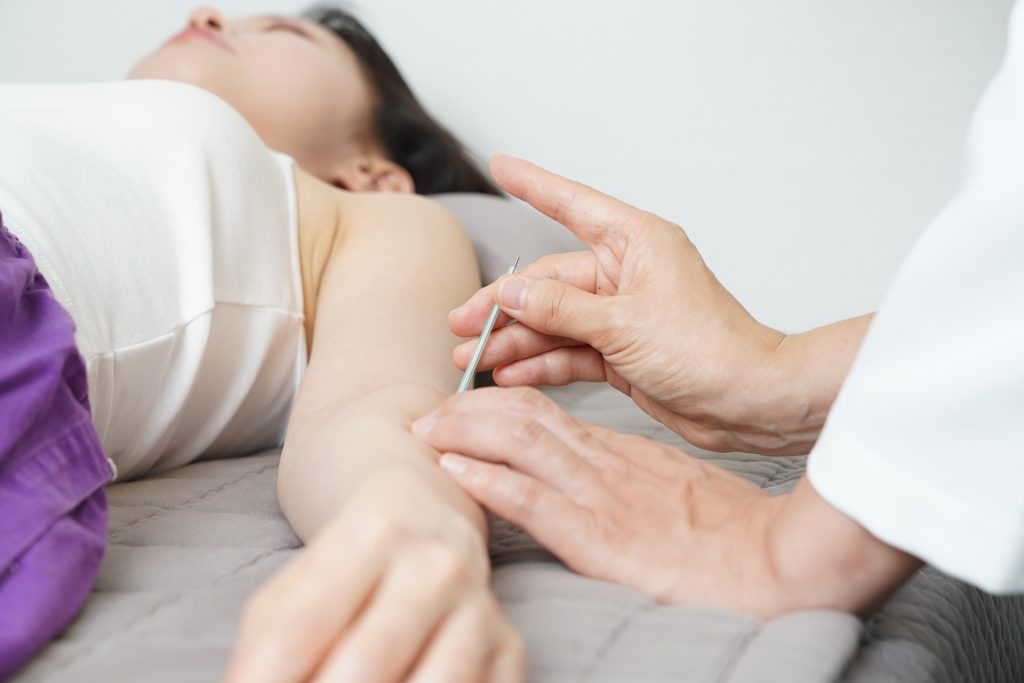
Medical acupuncture — sometimes called Western acupuncture or dry needling — is a clinical treatment that involves the precise insertion of very fine, sterile needles into specific points on the body. Unlike traditional Chinese acupuncture, which is based on ancient theories of energy flow (qi) along meridians, medical acupuncture is grounded entirely in modern anatomy, physiology, and neuroscience.
At Four Oaks Physio, our chartered physiotherapists use acupuncture as an evidence-informed tool within a broader treatment plan — alongside manual therapy, rehabilitation exercises, and personalised advice. Our practitioners hold advanced postgraduate qualifications with both the British Medical Acupuncture Society (BMAS) and the Acupuncture Association of Chartered Physiotherapists (AACP), two of the most respected professional bodies in the field.
How Does Medical Acupuncture Work?
The mechanisms behind medical acupuncture are well documented. When a needle is inserted into tissue, it triggers a cascade of physiological responses that help the body heal and manage pain more effectively.
Pain gate modulation: Needling stimulates sensory nerve fibres (A-delta fibres) that effectively “close the gate” on pain signals travelling to the brain — providing immediate relief in many patients. [1]
Endorphin release: Acupuncture prompts the release of the body’s natural painkillers, including endorphins and enkephalins. This explains the deep sense of calm and reduced pain many patients experience during and after treatment. [2]
Trigger point release: When needles are inserted into myofascial trigger points — tight, hypersensitive knots within a muscle — they help reset the muscle’s neurological activity, reducing spasm and restoring normal function. This is particularly effective for shoulder, neck, and lower back conditions. [3]
Anti-inflammatory effect: Research suggests that needling can reduce local inflammation by influencing the activity of inflammatory mediators, promoting faster tissue healing. [4]
Central nervous system effects: Repeated sessions can produce longer-term changes in how the brain processes pain signals — an important consideration for patients with chronic or persistent pain. [5]
Conditions We Treat with Medical Acupuncture
Medical acupuncture is most effective for musculoskeletal pain conditions. At Four Oaks Physio, we commonly use it to treat:
Back Pain
Lower back pain is one of the most common reasons people seek acupuncture. Whether your pain is acute (a recent strain or disc problem) or chronic (persistent aching over months or years), acupuncture can reduce pain intensity, ease muscle spasm, and complement your physiotherapy programme. Many of our patients report significant relief within just a few sessions. A Cochrane systematic review concluded that acupuncture is more effective than no treatment and at least as effective as other active treatments for chronic low back pain. [6]
Neck Pain and Stiffness
Neck pain — often worsened by poor posture, desk work, or stress — responds very well to medical acupuncture. We combine needling with hands-on manual therapy and targeted exercises to address both the symptom and the underlying cause. Evidence from multiple randomised controlled trials supports acupuncture as an effective intervention for both acute and chronic neck pain. [7]
Shoulder Pain
Frozen shoulder, rotator cuff problems, and persistent shoulder tension are among the conditions we see most frequently in clinic. Acupuncture helps break the pain-spasm cycle, allowing patients to engage more effectively with their rehabilitation exercises.
Sciatica and Nerve Pain
For patients with sciatic nerve irritation causing pain, numbness, or tingling down the leg, acupuncture can help reduce nerve sensitivity and complement the spinal mobilisation work carried out by your physiotherapist.
Headaches and Migraines
There is strong clinical evidence supporting the use of acupuncture for tension-type headaches and migraines. NICE guidelines (NG193) recommend acupuncture as a treatment option for the prevention of both tension-type headaches and migraines. [8] By targeting trigger points in the neck, upper back, and scalp muscles, treatment can reduce both the frequency and severity of headaches over time.
Knee and Hip Pain
Acupuncture is increasingly used for osteoarthritic knee and hip pain, offering a drug-free way to manage discomfort and improve joint mobility in patients who prefer to avoid or delay surgery. A large meta-analysis published in the Journal of Pain found acupuncture to be significantly more effective than sham acupuncture and no acupuncture for osteoarthritic pain. [9]
What Our Patients Say
The results speak for themselves. Here is just a small selection of the feedback we receive from patients who have experienced medical acupuncture at Four Oaks Physio:
“I had several sessions of acupuncture with Vis to relieve chronic shoulder spasms, neck pain and nighttime headaches. The relief achieved meant I could start to move again and my headaches receded.” — Tony B, Sutton Coldfield
“He suggested a course of 8 acupuncture treatments. I got relief from some pain by the following week… pleased to say I was doing this without any analgesia. Now after 8 treatments I am a lot better.” — Paramjit C, Sutton Coldfield
“Vis performed an acupuncture treatment on me and by the next day my back had responded very well and I was able to move around with ease again.” — Charlotte C, Sutton Coldfield
“With a combination of manipulation, acupuncture and exercise after 5 sessions I feel like a changed man. I’m not in pain and using my stick far less.” — Roger W, Sutton Coldfield
Is Medical Acupuncture Safe?
Yes — when carried out by a qualified, experienced practitioner, medical acupuncture is a very safe treatment with a low risk of adverse effects. At Four Oaks Physio, we use single-use, sterile needles throughout. Our practitioners conduct a thorough assessment before any treatment begins to identify any contraindications (such as certain blood disorders, pregnancy considerations, or active infection).
Minor side effects — such as mild bruising at the needle site, temporary soreness, or a brief feeling of light-headedness — are normal and resolve quickly. Serious adverse events are extremely rare when treatment is delivered by HCPC-registered physiotherapists with specialist acupuncture training. A large prospective survey of over 34,000 acupuncture treatments found the risk of serious adverse events to be very low when carried out by trained professionals. [10]
What to Expect at Your First Appointment
Initial Assessment Your first appointment begins with a thorough consultation. We take a full medical history, discuss your symptoms and goals, and carry out a physical assessment to identify the root cause of your pain.
Treatment Plan Based on your assessment, we create a personalised treatment plan. This will outline whether medical acupuncture is appropriate for you, how many sessions we recommend, and how it will integrate with any manual therapy or exercise programme.
Your First Acupuncture Session Very fine needles (typically 0.25–0.30mm in diameter) are inserted into carefully selected points. Many patients find the experience surprisingly comfortable — often describing a mild aching or tingling sensation as the needle reaches the target tissue. Sessions typically last 20–40 minutes.
Ongoing Review We review your response after each session and adjust the treatment accordingly. Most patients complete a course of 4–8 sessions, though this varies depending on the condition and severity.
Clinic and Home Visit Options
We understand that not everyone can travel to our clinic on Harcourt Drive, Sutton Coldfield. For patients who are housebound, recovering from surgery, or living with a condition that makes travel difficult, we offer home visit physiotherapy — including medical acupuncture — across Sutton Coldfield, Birmingham, Walsall, Lichfield, and Tamworth.
Our home visit service brings the same clinical expertise directly to your door, with no reduction in the quality or effectiveness of treatment.
Do I Need a GP Referral?
No. You can book directly with Four Oaks Physio without a referral from your GP. We are also recognised by major private health insurers including Bupa, AXA Health, Aviva, and Simplyhealth, so if you have private medical insurance, your acupuncture treatment may be covered under your policy.
Why Choose Four Oaks Physio for Medical Acupuncture?
There are many acupuncture providers in the Birmingham area, so what makes Four Oaks Physio different?
- 25+ years of specialist experience in physiotherapy and medical acupuncture
- BMAS and AACP accredited — among the highest qualifications available in the UK
- HCPC registered and CSP chartered physiotherapists
- Integrated treatment approach — acupuncture is never used in isolation, but as part of a wider, evidence-based rehabilitation plan
- Flexible appointments — clinic and home visits available, including evenings and weekends
- 5.0 stars on Google — consistently excellent patient outcomes and feedback
- No GP referral needed — fast access to treatment when you need it most
Book Your Medical Acupuncture Appointment
If you are suffering from pain that is affecting your quality of life, we would love to help. Whether you have tried acupuncture before or are considering it for the first time, our experienced team will guide you through every step of the process.
Call us: 07894 988812 Email: info@fouroaksphysio.co.uk Clinic address: 10 Harcourt Drive, Sutton Coldfield, Birmingham, B74 4LJ Working hours: Monday–Friday 09:00–19:00 | Weekends 10:00–17:00
No GP referral needed. Home visits available across Sutton Coldfield, Walsall, Lichfield, Tamworth and Birmingham.
Four Oaks Physio is registered with the HCPC, CSP, BMAS, and AACP. All acupuncture treatment is carried out by chartered physiotherapists with specialist postgraduate acupuncture qualifications.
References
- Melzack R, Wall PD. Pain mechanisms: a new theory. Science. 1965;150(3699):971–979. https://doi.org/10.1126/science.150.3699.971
- Han JS. Acupuncture and endorphins. Neuroscience Letters. 2004;361(1–3):258–261. https://doi.org/10.1016/j.neulet.2003.12.019
- Travell JG, Simons DG. Myofascial Pain and Dysfunction: The Trigger Point Manual. Williams & Wilkins; 1983.
- McDonald JL, Cripps AW, Smith PK. Mediators, receptors, and signalling pathways in the anti-inflammatory and antinociceptive effects of acupuncture. Evidence-Based Complementary and Alternative Medicine. 2015;2015:975632. https://doi.org/10.1155/2015/975632
- Zhao ZQ. Neural mechanism underlying acupuncture analgesia. Progress in Neurobiology. 2008;85(4):355–375. https://doi.org/10.1016/j.pneurobio.2008.05.004
- Furlan AD, van Tulder MW, Cherkin DC, et al. Acupuncture and dry-needling for low back pain: an updated systematic review within the framework of the Cochrane Collaboration. Spine. 2005;30(8):944–963. https://doi.org/10.1097/01.brs.0000158941.21571.01
- Trinh K, Graham N, Gross A, et al. Acupuncture for neck disorders. Cochrane Database of Systematic Reviews. 2007;(3):CD004870. https://doi.org/10.1002/14651858.CD004870.pub3
- National Institute for Health and Care Excellence (NICE). Headaches in over 12s: diagnosis and management. Clinical Guideline NG193. London: NICE; 2021. https://www.nice.org.uk/guidance/ng193
- Vickers AJ, Vertosick EA, Lewith G, et al. Acupuncture for chronic pain: update of an individual patient data meta-analysis. Journal of Pain. 2018;19(5):455–474. https://doi.org/10.1016/j.jpain.2017.11.005
- MacPherson H, Scullion A, Thomas KJ, Walters S. Patient reports of adverse events associated with acupuncture treatment: a prospective national survey. Quality & Safety in Health Care. 2004;13(5):349–355. https://doi.org/10.1136/qshc.2003.009134