
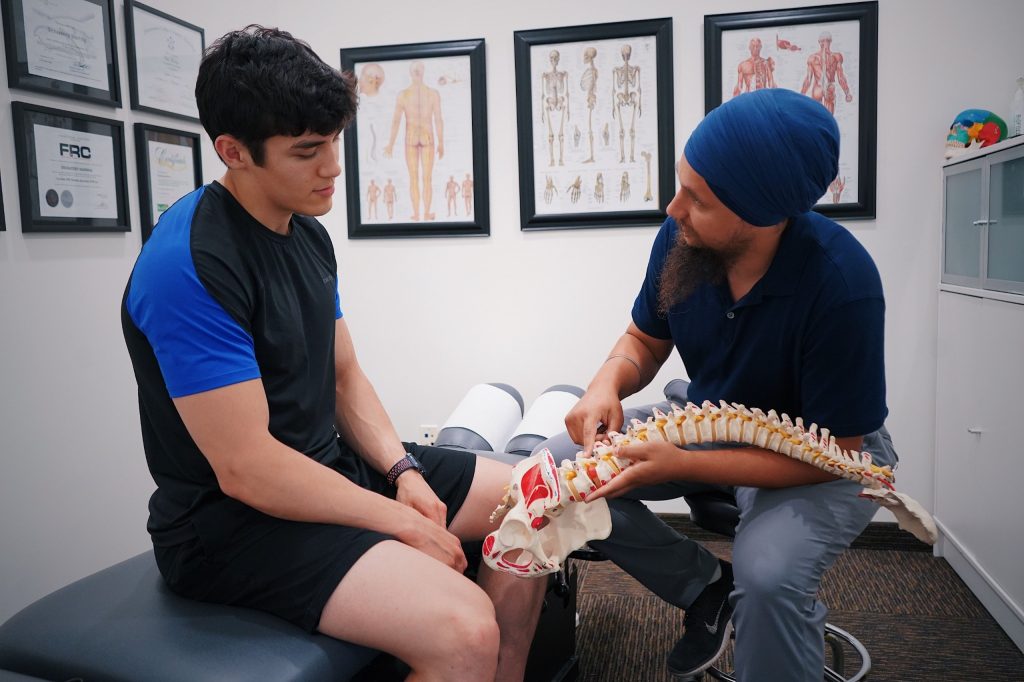
Sciatica describes pain that travels from the lower back or buttock down the leg, caused by irritation or compression of the sciatic nerve. It can range from a mild ache to a sharp, shooting pain that makes sitting, walking, or even sleeping difficult. If you’re not sure whether what you’re feeling is sciatica or “ordinary” back pain, our post on is it back pain or sciatica explains the difference in more detail.
The reassuring news is that most sciatica settles on its own over several weeks, and gentle, targeted exercise is one of the most effective things you can do to speed that process along. This guide covers exercises commonly used to ease sciatic nerve pain, what to steer clear of, and the red flags that mean you need urgent medical attention.
Before you start: sciatica has several possible underlying causes, and not every exercise suits every person. These are general exercises appropriate for typical, straightforward sciatica. If a movement clearly increases your leg pain or numbness, stop and seek a proper assessment.
Why Exercise Helps with Sciatica
NHS and NICE guidance both point in the same direction: staying active, rather than resting for long periods, supports faster recovery from sciatica. Long periods of sitting or lying down are generally best avoided, even though moving can feel uncomfortable at first — discomfort during movement is not the same as harm. NICE guidance also notes that a supervised exercise programme is a core part of managing sciatica, often alongside advice and, where appropriate, manual therapy.
Exercises for Sciatica
Work within a comfortable range. A small increase in leg symptoms during an exercise that settles quickly afterwards is generally acceptable; pain that keeps building, or new numbness and weakness, is not.
1. Sciatic Nerve Glides (“Nerve Flossing”)
Sit tall on a chair. Straighten one knee while gently pulling your toes up towards you, then at the same time tip your head forward slightly. Return to the start position by bending the knee and tilting your head back. The nerve should glide rather than stretch hard.
- Reps: 5–10, slow and smooth
- Frequency: 2–3 times a day
- Why it helps: Encourages the irritated nerve to move more freely within surrounding tissues, which can reduce sensitivity.
2. Knee-to-Opposite-Shoulder Stretch
Lie on your back with knees bent. Clasp your hands behind the thigh of the affected leg and gently draw the knee across your body towards the opposite shoulder, feeling a stretch through the buttock.
- Hold: 5–10 seconds
- Reps: 5-10 per side
- Frequency: 2–3 times a day
- Why it helps: Targets the piriformis and deep gluteal muscles, which can compress the sciatic nerve when tight or in spasm.
3. Piriformis Stretch (Figure-Four)
Lie on your back with both knees bent. Cross the ankle of the affected leg over the opposite knee, then gently pull the uncrossed thigh towards your chest until you feel a stretch in the buttock of the crossed leg.
- Hold: 5–10 seconds
- Reps: 5-10 per side
- Frequency: 2–3 times a day
- Why it helps: Directly stretches the piriformis muscle, a common contributor to sciatic-type symptoms.
4. Child’s Pose
Kneel on the floor, sit back onto your heels, and reach your arms forward along the floor, letting your chest lower gently towards the ground.
- Hold: 5–10 seconds
- Reps: 5-10
- Frequency: 2–3 times a day
- Why it helps: Gently decompresses the lower spine and stretches the lower back and hips.
5. Standing Lumbar Extension
Stand with feet hip-width apart, hands supporting your lower back. Gently lean backwards from the hips, keeping knees straight, then return to standing.
- Reps: 5–10
- Frequency: Several times a day if comfortable
- Why it helps: For some people with sciatica, this movement helps centralise pain (move it away from the leg and back towards the spine), which is generally a good sign. It doesn’t suit everyone — stop if it worsens leg symptoms.
6. Glute Bridge
Lie on your back with knees bent and feet flat. Squeeze your buttocks and lift your hips off the floor into a straight line from knees to shoulders, then lower slowly.
- Reps: 5–10
- Frequency: Once symptoms allow, 2-3 times daily
- Why it helps: Builds strength in the glutes and lower back, supporting the spine as acute symptoms settle.
7. Regular Walking
Short, frequent walks help maintain movement of the nerve and surrounding tissues without prolonged loading in one position.
- Duration: Start with 5–10 minutes, several times a day, building gradually.
What to Avoid with Sciatica
- Prolonged sitting, especially in soft chairs or low seating — this often aggravates sciatic symptoms.
- Aggressive stretching that pushes hard into pain, particularly with nerve glides, which should feel like gentle movement, not a strong pull.
- Complete bed rest. As with general back pain, extended rest tends to slow recovery rather than protect the nerve.
- Ignoring worsening neurological symptoms — increasing numbness, weakness, or pins and needles that don’t settle.
Red Flags: When to Seek Urgent Medical Attention
Sciatica is rarely dangerous, but a small number of presentations need emergency assessment. Seek immediate medical help (call 999 or go to A&E) if you experience:
- Loss of bladder or bowel control, or you can’t feel yourself going to the toilet
- Numbness around your genitals, buttocks, or inner thighs (saddle anaesthesia)
- Weakness or numbness affecting both legs
- Sudden, severe worsening of symptoms after an injury
These can be signs of cauda equina syndrome, a rare but serious condition that requires same-day hospital treatment.
When to See a Physiotherapist
If your sciatica hasn’t started to improve within a couple of weeks, is disturbing your sleep, or is limiting your ability to work or move around, it’s worth getting an individual assessment. A physiotherapist can identify which movements ease your specific symptoms and which don’t — since, as the exercises above show, some movements suit one person and aggravate another.
At Four Oaks Physio in Sutton Coldfield, we offer rapid-access assessment for sciatica and lower back pain, no GP referral required, including home visits for those who find travelling difficult. Our pain management physiotherapy combines a tailored exercise programme with manual therapy and medical acupuncture where appropriate. If you’re also dealing with more general back pain, our guide to exercises for acute lower back pain may also be useful, alongside our lower back pain physiotherapy guide.
Frequently Asked Questions
How long does sciatica usually take to improve? Most cases improve substantially within four to six weeks, though it can take longer for some people. Persistent or worsening symptoms beyond this point are worth having assessed.
Should nerve glide exercises hurt? No — they should feel like gentle movement, not a strong stretch or pull. If they increase your leg pain, ease off the range of movement or stop and seek advice.
Is walking okay with sciatica? Generally yes, and it’s often encouraged. Start with shorter distances and build up gradually as symptoms allow.
Can sciatica come back after it settles? It can, particularly if underlying contributing factors — such as prolonged sitting, muscle weakness, or posture — aren’t addressed. A physiotherapy assessment can help identify and manage these factors.
Book an Assessment at Four Oaks Physio
If your sciatica isn’t settling, or the exercises above bring up questions specific to your situation, our chartered physiotherapists can assess you and build a plan around your symptoms. Contact us to book an appointment in Sutton Coldfield or arrange a home visit.
References
- National Institute for Health and Care Excellence (NICE). Low back pain and sciatica in over 16s: assessment and management (NG59). Available at: nice.org.uk/guidance/ng59
- NHS. Sciatica. Available at: nhs.uk/conditions/sciatica
- NHS. Exercises for sciatica problems. Available at: nhs.uk/live-well/exercise/exercises-sciatica-problems
This article is for general information only and does not replace individual assessment by a qualified healthcare professional. If you have any doubt about whether these exercises are suitable for you, please consult a physiotherapist or your GP first.