
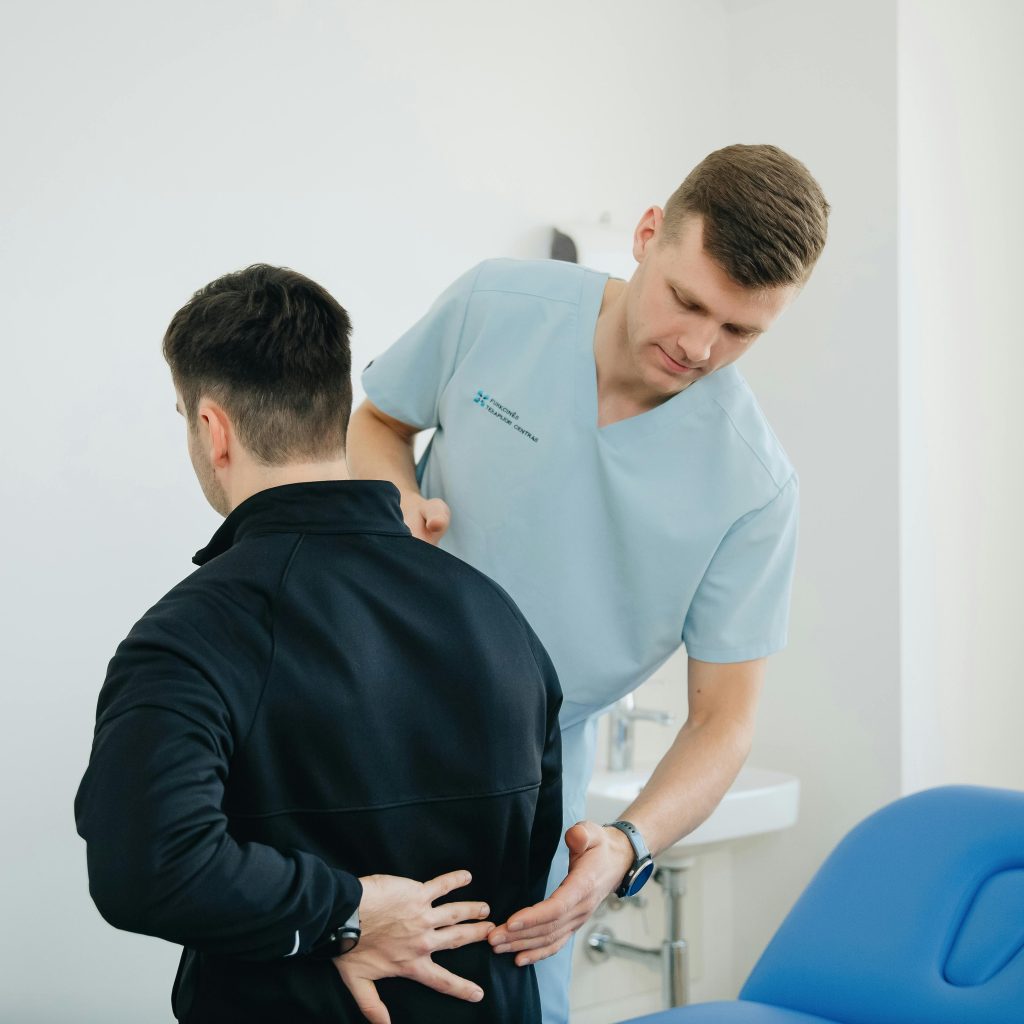
Published by Four Oaks Physio | Sutton Coldfield | Category: Musculoskeletal Health
Lower back pain is one of the most common reasons people in the UK visit their GP — and one of the leading causes of time off work. The good news? Most cases respond extremely well to physiotherapy, and you don’t need a GP referral to get started.
Whether your pain came on suddenly after lifting something heavy, crept up slowly after months of desk work, or has been nagging you on and off for years — this guide will help you understand what’s happening, what you can do about it, and when expert help is the right move.
Why Is Lower Back Pain So Common?
The lower back — or lumbar spine — is an engineering marvel. It supports the weight of your entire upper body, allows you to bend, twist, and lift, and houses the nerves that travel into your legs. Because it does so much, it’s also vulnerable to strain, poor posture, and wear over time.
According to the NHS, lower back pain affects most people at some point in their lives and is one of the leading causes of disability in the UK. The Global Burden of Disease Study identifies it as the single biggest cause of disability worldwide. With more people working from home, sitting for longer hours, and leading less active lifestyles, rates have only climbed in recent years.
Common Causes of Lower Back Pain
Lower back pain isn’t one condition — it’s a symptom with many possible causes. Some of the most common include:
Muscle and ligament strain — Sudden awkward movements, heavy lifting, or simply overdoing it at the gym can overstretch the muscles and ligaments in your lower back, causing sharp or aching pain. This is the most common form of acute back pain and typically responds quickly to musculoskeletal physiotherapy.
Disc problems — The discs between your vertebrae act as shock absorbers. A bulging or herniated disc can press on nearby nerves, causing localised pain or shooting discomfort down into the leg. This is commonly known as sciatica — a condition we treat regularly at Four Oaks Physio.
Facet joint irritation — Small joints at the back of the spine can become inflamed or stiff, particularly with age, causing pain that’s often worse in the morning or after sitting for extended periods.
Postural stress — Prolonged sitting, slouching, or poor workstation set-up places repeated strain on the lower back structures, leading to gradual onset pain. NHS guidance on posture highlights the importance of maintaining good seated alignment throughout the working day.
Osteoarthritis — Degeneration of the spinal joints is common in older adults and can cause stiffness, aching, and reduced range of movement. Versus Arthritis offers comprehensive information on this condition and how it affects the spine.
Sciatica — Irritation or compression of the sciatic nerve causes pain, tingling, or numbness that travels from the lower back into the buttock and down the leg. Visit our musculoskeletal services page to learn how we assess and treat this condition.
Red Flags: When to Seek Help Urgently
Most lower back pain is benign and improves with appropriate management. However, according to NICE Clinical Guidelines on Low Back Pain (NG59), you should seek urgent medical attention if your back pain is accompanied by:
- Loss of bladder or bowel control
- Numbness or weakness in both legs
- Pain following a significant fall or trauma
- Unexplained weight loss
- Severe pain that is constant and doesn’t ease with any position
If you are unsure, contact your GP or NHS 111.
How Physiotherapy Helps Lower Back Pain
Physiotherapy is one of the most effective and evidence-based treatments for lower back pain — whether it’s acute (just started) or chronic (lasting more than 12 weeks). NICE guidelines (NG59) recommend exercise and manual therapy as first-line treatments for low back pain, prioritising them over medication where possible.
At Four Oaks Physio, our chartered physiotherapists begin with a thorough assessment to identify the root cause of your pain. We don’t just treat the symptom — we find out why your back is hurting and create a personalised plan to fix it.
Manual Therapy
Hands-on techniques including joint mobilisation, manipulation, and soft tissue massage help reduce pain, restore movement, and break the cycle of muscle spasm. Many patients feel relief after their very first session. The Chartered Society of Physiotherapy (CSP) recognises manual therapy as a core component of effective back pain management.
Targeted Exercise Rehabilitation
Specific exercises to strengthen your core muscles, improve flexibility, and correct movement patterns are central to long-term recovery. Weak core muscles are one of the most overlooked contributors to persistent lower back pain — and one of the most correctable. A 2021 systematic review published in the British Journal of Sports Medicine confirmed that structured exercise therapy produces significant improvements in both pain and function for chronic lower back pain patients.
Acupuncture
Medical acupuncture (dry needling) is a powerful adjunct for lower back pain. Fine needles are inserted at specific trigger points to stimulate the body’s natural pain-relieving mechanisms, reduce muscle tension, and promote healing. Our physiotherapists are accredited members of the British Medical Acupuncture Society (BMAS), ensuring treatment meets the highest clinical standards.
Postural and Ergonomic Advice
We help you understand how your daily habits — from how you sit at your desk to how you load the dishwasher — may be contributing to your pain. Simple changes to posture and ergonomics can make a significant difference. NHS guidance on workplace ergonomics provides a useful starting framework.
Electrotherapy
TENS (Transcutaneous Electrical Nerve Stimulation) and interferential therapy can reduce pain and inflammation, particularly in the early acute stage. The Pain Relief Foundation provides further reading on how electrotherapy works in pain management.
Education and Self-Management
Understanding your condition is powerful. We equip you with the knowledge and tools to manage flare-ups, stay active, and prevent recurrence — so you’re not dependent on treatment indefinitely. Our pain management blog explores this approach in more detail.
What About Rest?
One of the most persistent myths about back pain is that rest is the best remedy. Research consistently shows the opposite: staying active — within comfortable limits — promotes faster recovery than bed rest. A landmark paper in the Cochrane Database of Systematic Reviews found that advice to remain active results in less pain and less disability compared to bed rest or no specific treatment.
The goal is active recovery, not passive waiting.
How Long Will It Take to Get Better?
Recovery timelines vary depending on the cause and duration of your pain:
- Acute lower back pain (0–6 weeks): Most people improve significantly within 4–6 weeks with physiotherapy.
- Subacute pain (6–12 weeks): Targeted rehabilitation typically produces excellent outcomes, though it may take a full course of treatment.
- Chronic lower back pain (12+ weeks): Recovery is still very achievable, but requires a structured, longer-term programme. A meta-analysis in JAMA Internal Medicine demonstrated that exercise therapy significantly outperforms usual care for chronic lower back pain over the long term.
We’ll give you a realistic recovery timeline after your initial assessment — and we won’t keep you coming back longer than necessary.
Home Exercises for Lower Back Pain
While these are general exercises that many people find helpful, always check with a physiotherapist before starting if your pain is severe or you’re unsure of the cause. The NHS Back Pain Exercise Guide also offers useful beginner-level movements.
Knee-to-Chest Stretch — Lie on your back, gently pull one knee towards your chest, hold for 20–30 seconds, and alternate sides. This gently stretches the lower back and relieves compression.
Pelvic Tilts — Lie on your back with knees bent. Gently flatten your lower back against the floor by tightening your abdominal muscles, hold for 5 seconds, and release. Repeat 10–15 times.
Cat-Cow Stretch — On all fours, alternate between arching your back towards the ceiling (cat) and letting it dip towards the floor (cow). This mobilises the entire spine and is recommended by Versus Arthritis as a gentle daily mobility routine.
Glute Bridge — Lie on your back with knees bent. Slowly lift your hips off the floor, squeezing your glutes at the top. Hold briefly, then lower. This strengthens the glutes and takes pressure off the lower back.
⚠️ Not sure if these exercises are right for you? Book an assessment with our team and we’ll build a tailored exercise programme specific to your condition and goals.
Why Choose Four Oaks Physio for Your Back Pain?
At Four Oaks Physio, we’ve been supporting people across Sutton Coldfield and the wider West Midlands for over 20 years. Our team of chartered physiotherapists holds full registration with the Chartered Society of Physiotherapy (CSP) and the Health and Care Professions Council (HCPC) — the two key regulatory bodies that guarantee your therapist meets nationally recognised professional standards.
No GP referral needed — With NHS waiting times at record highs, you shouldn’t have to wait months for help. We offer rapid-access appointments — you can be seen within days, not weeks.
Home visits available — If you’re struggling to get to the clinic due to severe pain or mobility difficulties, our home visit physiotherapy service brings expert care directly to you. We cover Sutton Coldfield, Walsall, Tamworth, Lichfield, Sandwell, Erdington, Great Barr, and surrounding Staffordshire areas.
Specialist neurological and elderly care — If your back pain is linked to a neurological condition or age-related changes, our neurological physiotherapy and elderly care physiotherapy services provide specialist support.
Holistic, evidence-based care — We treat you as a whole person, not just a back. Our plans are built around your lifestyle, your goals, and the latest clinical evidence — including NICE guidelines and CSP best practice standards.
Book an Appointment
Don’t let back pain hold you back from the life you want to live. The earlier you seek expert help, the faster and more complete your recovery is likely to be.
📞 Call us: 07894 988812 📧 Email: info@fouroaksphysio.co.uk 🕘 Hours: Mon–Fri 9:00–19:00 | Sat–Sun 10:00–17:00 📍 Clinic: 10 Harcourt Drive, Four Oaks, Sutton Coldfield (free off-road parking)
Four Oaks Physio — You are in safe hands.
References
- NHS. Back pain. Available at: https://www.nhs.uk/conditions/back-pain/
- GBD 2017 Disease and Injury Incidence and Prevalence Collaborators. Global, regional, and national incidence, prevalence, and years lived with disability for 354 diseases and injuries for 195 countries and territories, 1990–2017. The Lancet. 2018. Available at: https://www.thelancet.com/journals/lancet/article/PIIS0140-6736(18)30994-2/fulltext
- National Institute for Health and Care Excellence (NICE). Low back pain and sciatica in over 16s: assessment and management. NG59. 2016 (updated 2020). Available at: https://www.nice.org.uk/guidance/ng59
- Chartered Society of Physiotherapy (CSP). Back pain and physiotherapy. Available at: https://www.csp.org.uk/public-patient/physiotherapy-explained/conditions-physiotherapy-can-treat/back-pain
- Owen PJ, et al. Corrective exercise and manual therapy compared to general exercise for chronic low back pain. British Journal of Sports Medicine. 2021;55(21):1186–1196. Available at: https://bjsm.bmj.com/content/55/21/1186
- Dahm KT, et al. Advice to rest in bed versus advice to stay active for acute low-back pain and sciatica. Cochrane Database of Systematic Reviews. 2010. Available at: https://www.cochranelibrary.com/cdsr/doi/10.1002/14651858.CD001824/full
- Saragiotto BT, et al. Motor control exercise for nonspecific low back pain. JAMA Internal Medicine. 2016. Available at: https://jamanetwork.com/journals/jamainternalmedicine/fullarticle/2504142
- Versus Arthritis. Osteoarthritis. Available at: https://www.versusarthritis.org/about-arthritis/conditions/osteoarthritis/
- British Medical Acupuncture Society (BMAS). Available at: https://www.medical-acupuncture.co.uk/
- Health and Care Professions Council (HCPC). Available at: https://www.hcpc-uk.org/
Disclaimer: This blog is for informational purposes only and does not constitute medical advice. If you are experiencing severe, worsening, or concerning symptoms, please consult a qualified healthcare professional or contact NHS 111.