
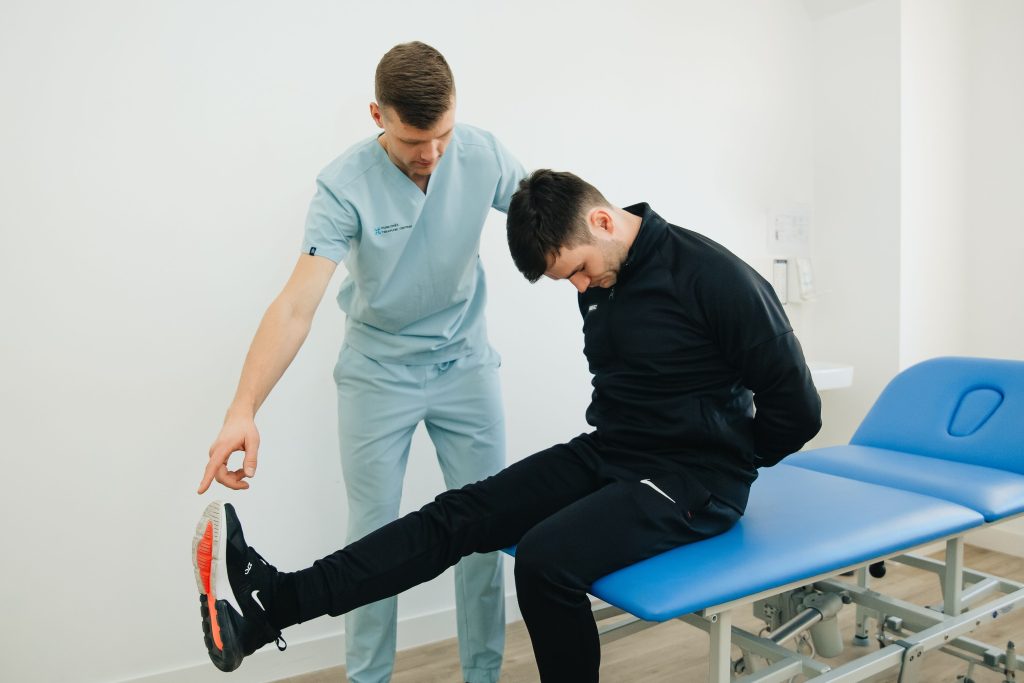
Acute lower back pain — pain that comes on suddenly and has lasted less than six weeks — is one of the most common reasons people contact us at Four Oaks Physio in Sutton Coldfield. It can be alarming, especially if it started after lifting something, an awkward twist, or seemingly out of nowhere. The good news is that most acute low back pain settles well, and the right movement — not rest — is usually the fastest route back to normal.
This guide walks through exercises that are commonly recommended in the early stages of acute low back pain, what to avoid, and the warning signs that mean you should seek help sooner rather than later. If you’d like the fuller picture of causes, timelines and treatment options, our lower back pain physiotherapy guide covers that in depth — this post focuses specifically on exercise.
A quick note before you start: every back is different. These are general exercises suitable for most people with straightforward, non-specific acute low back pain. They are not a substitute for individual assessment, and if anything feels sharply painful or wrong, stop and get checked.
Why Movement Matters More Than Rest
For decades the standard advice for a “bad back” was to rest up. That advice has been overturned. Current guidance from the National Institute for Health and Care Excellence (NICE) encourages people to stay as active as possible and to continue with normal activities during an episode of low back pain, rather than resting in bed. The NHS gives the same message: staying still for long periods can actually slow recovery, and gentle movement — even when it’s a little uncomfortable — helps your back get moving again.
The exercises below are aimed at gently restoring movement and easing muscle guarding, not “fixing” a structural problem. Mild discomfort during these movements is normal and expected; sharp, worsening, or radiating pain is not.
Exercises for Acute Lower Back Pain
Start gently. Aim for smooth, controlled movement rather than pushing into pain. A good rule of thumb used by many physiotherapists is to keep discomfort at a mild level (roughly 3 out of 10) and to expect it to ease within 20–30 minutes of finishing.
1. Pelvic Tilts
Lie on your back with your knees bent and feet flat on the floor. Gently flatten your lower back into the floor by tightening your tummy muscles and tilting your pelvis, then release. This is a small, subtle movement rather than a big one.
- Reps: 5-10, held for 2–3 seconds each
- Frequency: 2–3 times a day
- Why it helps: Gently mobilises the lower spine and reduces muscle guarding without loading the back.
2. Knee Rolls
Lying in the same position, keep your knees together and slowly let them fall to one side, then bring them back to the centre and roll to the other side. Keep the movement small and pain-free.
- Reps: 5–10 each side
- Frequency: 2–3 times a day
- Why it helps: Introduces gentle rotation to the spine, which tends to feel restricted in acute back pain.
3. Single Knee-to-Chest Stretch
Lying on your back, bring one knee up towards your chest and hold it gently with both hands behind the thigh. Keep the other leg bent with the foot flat on the floor.
- Hold: 5–10 seconds
- Reps: 3-5 per side
- Why it helps: Eases tension in the lower back and buttock muscles.
4. Cat–Camel (on hands and knees)
Start on your hands and knees, back in a neutral position. Slowly arch your back upward (like a cat), then let it dip gently downward (like a camel), moving through a comfortable range.
- Reps: 5–10, slow and controlled
- Frequency: 2–3 times a day
- Why it helps: Mobilises the whole spine gently through flexion and extension.
5. Prone Lying with Gentle Press-Up (McKenzie-style extension)
Lie on your front, then prop yourself up onto your forearms, letting your lower back relax into a gentle curve. If comfortable, some people progress to pressing up further onto straight arms. Stop at the point of mild stretch, never pain.
- Hold: 5–10 seconds, building up
- Reps: 5–10
- Why it helps: For some people (particularly if pain is worse sitting), gentle extension can ease symptoms. It doesn’t suit everyone, so stop if it increases leg symptoms or back pain.
6. Short, Frequent Walks
Simple but effective. Short walks, several times a day, help maintain general movement and blood flow without overloading the back.
- Duration: Start with 5–10 minutes, several times a day
- Why it helps: Keeps you active without the sustained postures (sitting, standing still) that often aggravate acute back pain.
What to Avoid in the Acute Stage
- Prolonged bed rest. Short periods of rest are fine, but avoid lying down for hours at a time.
- Heavy lifting or bending under load until your pain has settled and you’ve been assessed.
- Pushing through sharp or worsening pain. Mild discomfort is expected; sharp or radiating pain is a signal to stop.
- Complete inactivity “just in case.” This tends to prolong recovery rather than protect the back.
Red Flags: When to Seek Urgent Medical Attention
Most acute low back pain is straightforward, but a small number of cases need urgent assessment. Contact your GP, NHS 111, or go to A&E immediately if you experience:
- Loss of bladder or bowel control, or numbness around the saddle area (between your legs)
- Numbness, tingling, or weakness in both legs
- Unexplained weight loss alongside back pain
- Back pain following significant trauma
- Fever combined with severe back pain
These can indicate a serious condition such as cauda equina syndrome, which requires emergency treatment. They are rare, but it’s important to know them.
When to See a Physiotherapist
If your pain hasn’t started to ease within a week or two, is affecting your sleep or daily activities, or you’re simply not sure your symptoms fit the “straightforward” picture above, it’s worth getting assessed rather than guessing. Some of the signs that it’s time to book in are covered in our post on 5 signs your back pain needs physiotherapy.
At Four Oaks Physio, we offer rapid-access physiotherapy assessment with no GP referral needed — including home visits if getting to a clinic is difficult. A proper assessment lets us tailor exercises to your specific presentation, rather than relying on generic advice. Our pain management physiotherapy service combines exercise therapy with manual therapy and, where appropriate, acupuncture.
If your leg is affected as well as your back, it’s worth reading our companion guide on exercises for sciatica, as the approach differs slightly when a nerve is involved.
Frequently Asked Questions
How long does acute lower back pain usually last? Most episodes improve significantly within four to six weeks, with many people noticeable better within a week or two of staying active and doing gentle exercise.
Is it normal for exercises to feel slightly uncomfortable? Yes. Mild, short-lived discomfort during and shortly after exercise is common and doesn’t mean you’re causing harm. Sharp or worsening pain is different and should not be pushed through.
Should I use heat or ice? Heat would be useful to ease muscle spasm if that’s causing pain and discomfort. Neither replaces movement as the main driver of recovery.
Can I keep working with acute back pain? In most cases, yes, with some short-term adjustments. Staying at work or returning quickly, where possible, is generally associated with better outcomes than prolonged time off.
Book an Assessment at Four Oaks Physio
If your back pain isn’t improving as expected, or you’d like a personalised exercise plan rather than generic advice, our chartered physiotherapists in Sutton Coldfield are here to help. Contact us to book an appointment or call us at 07894 988812, in clinic or at home.
References
- National Institute for Health and Care Excellence (NICE). Low back pain and sciatica in over 16s: assessment and management (NG59). Available at: nice.org.uk/guidance/ng59
- NHS. Back pain. Available at: nhs.uk/conditions/back-pain
- NHS. Exercises for back pain. Available at: nhs.uk/live-well/exercise
This article is for general information only and does not replace individual assessment by a qualified healthcare professional. If you have any doubt about whether these exercises are suitable for you, please consult a physiotherapist or your GP first.